

Why Choose Us?
Rich Experience
SJK was founded in 1994, focusing on the R & D, production, and sales of special rubber seals, and mastering high-end sealing professional production technology.
High Standard Products
The company mainly produces O-ring, ED ring, rubber gasket, rubber strip, and other sealing products.
Complete Qualifications
The enterprise has obtained IATF16949 certification, and has professional experimental facilities, more than 100 sets of advanced production and testing equipment, modern ERP management system, etc.
One-stop Service
In production, SJK has rich experience in seal mold development, and can undertake the design and manufacture of special and complex seals to meet customized needs of customers for special products.
Definition of Water Pump Gasket
Water pump gaskets seal the flange segments that hook the pump to the inlet and outlet pipes. If water is drawn by a positive displacement mechanism, such as a volute impeller, it's the job of this seal pair to ensure the coupling between the pump and those ports is tight. Expect the seal to be manufactured from a fairly rigid elastomer, especially if the gasket in question is bound for an application that uses hot water.
-

Engine Water Pump Gasket
Color: Any color as you need. OEM: supported. Package: As you need. Add to Inquiry -
Water Pump Mounting Gasket
Size: Standard, or custom made. Material: aluminum, rubber, plastic Add to Inquiry -
Car Water Pump Gasket
Size: Standard, or custom made. Material: aluminum, rubber, plastic Add to Inquiry -
Water Pump Rubber Gasket
Size: Standard, or custom made. Material: aluminum, rubber, plastic Add to Inquiry -
Engine Water Pump Gasket And Seal
Size: Standard, or custom made. Material: aluminum, rubber, plastic Add to Inquiry -
Water Pump Gasket Replacement
Size: Standard, or custom made. Material: aluminum, rubber, plastic Add to Inquiry -
Water Pump Gasket Seal
Size: Standard, or custom made. Material: aluminum, rubber, plastic Add to Inquiry -
Gasket Water Pump
Product: Gasket Water Pump. Size: Standard, or custom made. Material: aluminum, rubber, plastic Add to Inquiry -
Metal Water Pump Gasket
Size: As per customer requirement, standard. Color: Red, Black, Any color as you need. OEM: Add to Inquiry


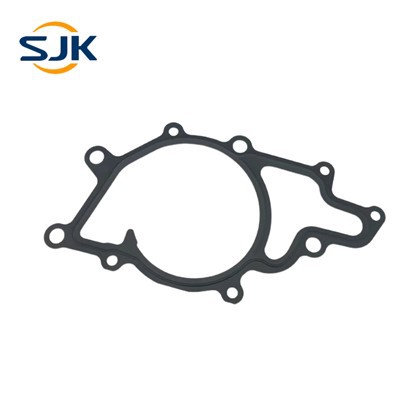


There are 3 types of water pump gasket,rubber gasket, aluminum gasket, and rubber coating gasket.
Jiacheng New material (SJK) supply both stock and custom made water pump gasket. Contact us for details.
Benefits of Water Pump Gasket
Water pump gaskets are commonly used on pumps to create a seal between two or more surfaces, preventing fluid from leaking out of the pump and reducing the risk of contamination. Gaskets are typically made from a variety of materials, including rubber, cork, paper, and metal, depending on the specific requirements of the application.
Prevent leaks
One of the primary reasons why gaskets are used on pumps is to prevent fluid from leaking out of the pump. In many applications, such as chemical processing or wastewater treatment, even small leaks can be dangerous or harmful. By creating a seal between the pump and other components in the system, gaskets can help to prevent leaks and reduce the risk of contamination.
Improve performance
Gaskets can also be used to improve the performance of the pump by reducing the amount of fluid that is lost due to leakage. In some applications, even a small amount of fluid loss can have a significant impact on the efficiency of the pump. By creating a tight seal between the pump and other components in the system, gaskets can help to reduce fluid loss and improve the performance of the pump.
Reduce maintenance requirements
By preventing leaks and reducing fluid loss, gaskets can also help to reduce the maintenance requirements of the pump. Without a gasket, fluid can leak out of the pump and accumulate on the surrounding components, which can lead to corrosion or damage over time. By creating a seal between the pump and other components, gaskets can help to prevent fluid from accumulating and reduce the need for maintenance.
Provide protection
In some applications, gaskets can also be used to provide additional protection to the pump and other components in the system. For example, gaskets made from certain materials may be resistant to chemicals or high temperatures, providing protection to the pump in harsh or challenging environments.
Customize the seal
Gaskets can be customized to fit the specific requirements of the application. For example, gaskets can be made from materials that are compatible with the fluid being pumped or that can withstand high temperatures or pressures. By customizing the gasket to the specific needs of the application, the seal can be optimized for maximum performance and durability.
Best Water Pump Gasket Material
01/
Platinum Cured Silicone – A very good all-rounder and can be used for both fresh and saltwater. It is also a firm favourite in the food, beverage and medical industries because it has no peroxide by-products. This means you cut a gasket from platinum cured silicone, that the gasket itself will not taint the water at all.
02/
Silicone rubber – This material is also highly weather-resistant and will react well under prolonged exposure to water. As well as being able to withstand heat, wind and rain, approved silicone sheet can also be used for drinking water.
03/
Neoprene rubber – Excellent for outdoor use and is highly resistant to water. Often used to protect electrical systems from bad weather. Neoprene will not degrade easily when exposed to either salt or freshwater.
04/
EPDM rubber – This synthetic rubber is one of the best types of gasket materials for use with water.
Should You Use a Water Pump Gasket on a Water Pump?
The improper use of sealants can contribute to premature failures of the water pump. Below are examples of improper use of sealant.
Both pumps were supplied with a cellulose / rubber binder gasket. These gaskets do not require the use of any sealants. However if the mating surface is damaged a small skim coat of sealant is allowable with these types of gaskets.
Both pumps were supplied with a rubber / O-ring style gasket. These types of gaskets do not require the use of any sealants. Both pumps to the left were supplied with a water pump gasket with a rubber lining the interior perimeter. This type of gasket does not require any sealer. It is clear that over use and misuse of sealants occured.
Installation practices of this nature will lead to premature water pump failures. Premature failures lead to product reliability / quality concerns from customers when in actuality the failure arose from miss-installation / improper use of sealants.
In the examples below one can see where sealer material has been found within the cartridge seal and has led to premature leakage of the water pump and the customer returned the pumps as an alleged manufacturer defect. To the left are examples of Dynamic and Static seal contamination / filming caused by over use of sealants. When sealant particulates / residue get trapped between the Dynamic and Static seal faces it causes a separation of the two surfaces which leads to a seal leak.
Water Pump Gasket: Sealing Issues with Pumps
There are several common problems that can occur with the sealing of pumps, including:
Incorrect gasket material: Using the wrong gasket material for the specific application can result in failures. We help customers choose the appropriate gasket material based on factors such as the temperature, pressure, and chemical compatibility of the fluid being pumped.
Damage: Gaskets can become damaged during installation or operation, leading to leaks.
To prevent these problems, it is important to regularly inspect and maintain the gaskets and packing materials in pumps and to replace them as necessary. It is also important to ensure that the correct gasket material is selected for the specific application and that the water pump gaskets are installed correctly.
Leaks
Leaks can occur if the gasket or packing material is not properly sealing the gap between the moving and stationary parts of the pump. This can result in a loss of efficiency and can lead to damage to the pump.
Wearing out of gaskets
Gaskets can wear out over time due to the constant movement and pressure within the pump. This can lead to leaks and a loss of efficiency.
Improper installation
If a gasket is not installed correctly, it may not seal properly and can result in leaks.
How to Tell if a Water Pump Gasket Is Bad?



Leaking coolant
A coolant leak can indicate many failures, but if it's coolant on the front of the engine, it's often a water pump leak. It's possible that the water pump gasket where it mounts to the engine is what's leaking, but it could also be the seal on the water pump shaft. Regardless, leaking coolant on the engine that drips to the ground is an indicator that is serious. Replacing the water pump and gasket should be in the plans.
For minor leaks, you'll notice a white trail of residue where it drips down the front of the engine, tinged with the color of your coolant. The leak may never reach the ground because the heat from the engine dries the coolant on the metal surfaces. Changing the water pump might also require changing the timing belt, the water pump pulley, the serpentine belt, or other engine seals and gaskets.
Overheating
If your engine is overheating, it's a sign that the heat generated from combustion isn't being transported to the radiator to be cooled. It can be due to several things such as:
An air pocket or airlock in the cooling system that prevents coolant from circulating, potentially due to a water pump leak.
The fins on the water pump impeller have been sheared off by debris or freezing,
The shaft is seized due to corrosion or bearing failure.
Overheating is a serious condition, and if you see the temperature gauge spike or have a warning message on your instrument cluster, stop your car as soon as possible and shut the engine off until it cools down. Repeatedly overheating your engine is a surefire way to cause lasting damage such as a blown head gasket, warped cylinder head, or even seizing the engine.
Squealing noise
A squealing or chirping noise from the front of the engine can also be an indication of a failing water pump. It can sound very much like when a serpentine belt is making noise, and in many cases, that's because it is. Additional resistance from the water pump can cause the belt to slip along the pulley, usually with a rhythmic cadence that's relative to the engine's rpms.
Again, the cause is usually a worn shaft bearing. In some cases, the water pump can maintain this type of operation for weeks or months, or even longer, or it could fail immediately after by seizing up. While it's one of the early signs of a bad water pump, it should be taken seriously, even if the noise comes and goes.
Whining noise
For water pumps on cars, the belt-driven or chain-driven pulley spins a shaft that turns an impeller inside the pump. If the symptom is a whining noise that varies with engine rpms, it might not be an internal problem at all. Rather, a whine often indicates that either the belt isn't tight enough or the pulley is damaged.
It might be surprising to hear that a pulley could be the cause, but it can happen. The pulley can crack between the bolt holes, and as a result, it doesn't run true. It's usually caused by rust on the pulley, so it's mostly an issue on older cars.
For some vehicles, water pump pulleys are part of the assembly while for others, they can be replaced separately.
Water pump corrosion
If you're experiencing bad water pump symptoms, it can be due to corrosion. Inside the pump, contaminated or improperly mixed coolant can contribute to corrosion on the impeller. One the exterior, corrosion can cause issues with the belt slipping on the pulley. And in some cases, visible corrosion or buildup on the water pump itself can indicate it's failing with no other symptoms at all.
Why You Should Never Replace a Water Pump Gasket Alone?
It is possible a water pump gasket can leak prior to a water pump failure. However, it's never a good idea to replace only the gasket. The pump may already be failing by the time the gasket leaks. It can also be difficult to diagnose if the pump is only leaking from the gasket, the shaft seal, or both.
Most water pumps are a labor-intensive repair. They may require a lot of disassembly to access, especially if they're driven by the timing belt. In most cases, the labor cost alone is substantially more than the cost of a water pump. This is another reason why you should always replace the water pump and gasket together. Even if you do the repair yourself, chances are you won't want to have to do it again when you thought only the gasket was bad.
Our Factory
Zhejiang Jiacheng New Material Co.,Ltd. (SJK for short) was founded in 1994, focusing on the R & D, production, and sales of special rubber seals, and mastering high-end sealing professional production technology. The company mainly produces O-ring, ED ring, rubber gasket, rubber strip, and other sealing products.
As a leading enterprise in domestic fluorine material sealing industry, SJK always keeps in mind the enterprise mission of "Striving for maximum interests of enterprises and customers". At present, SJK has won the trust and recognition of many well-know customers at home and abroad, and its sales network has covered Europe, America, the Middle East, Southeast Asia, and other places. With the vision of "becoming a world famous seal brand", SJK keeps forging ahead, has the courage to shoulder social responsibility, and abides by the core values of "honesty, pragmatism, innovation, and win-win". Strive to build the first brand of high-end seals.
Video 1
Video 2
Video 3
Our Certificate


Ultimate FAQ Guide to Water Pump Gasket
