

Why Choose Us?
Rich Experience
SJK was founded in 1994, focusing on the R & D, production, and sales of special rubber seals, and mastering high-end sealing professional production technology.
High Standard Products
The company mainly produces O-ring, ED ring, rubber gasket, rubber strip, and other sealing products.
Complete Qualifications
The enterprise has obtained IATF16949 certification, and has professional experimental facilities, more than 100 sets of advanced production and testing equipment, modern ERP management system, etc.
One-stop Service
In production, SJK has rich experience in seal mold development, and can undertake the design and manufacture of special and complex seals to meet customized needs of customers for special products.
Definition of V Ring
V-rings serve as lip seals or flinger rings. They are used to seal against dust, dirt, grease, oil or water splashes from the outside. The V-ring rotates with the shaft while sealing axially against the counter surface. V-rings are mainly used in combination with other seals, like radial shaft seals, but also as pre-sealing element for bearings. Being available in different types, V-rings provide high flexibility in usage for pressureless operations. Typical applications for V-rings are rolling mills, farm machinery and electric motors.
-

V Ring Rubber Seals
Size: Standard, non standard. Material: FKM, NBR, Silicone, EPDM, etc. Add to Inquiry -
EPDM Rubber V Ring
Size: Standard, non standard. Certification: RoHS, REACH, etc. Add to Inquiry -
Viton V Ring
Size: Standard, non standard. Certification: RoHS, REACH, etc. Add to Inquiry -
V Type Ring
Size: Standard, non standard. Certification: RoHS, REACH, etc. Add to Inquiry -
V Ring FKM60 Shore Brown VA
Size: Standard, non standard. Material: FKM, NBR, Silicone, EPDM, etc. Add to Inquiry -
V RING FKM60 Shore Brown VS
Size: Standard, non standard. Certification: RoHS, REACH, etc. Add to Inquiry -
V Ring NBR60 Shore Black VA
Size: Standard, non standard. Certification: RoHS, REACH, etc. Add to Inquiry -
V-ring Seals
Size: Standard, non standard. Material: FKM, NBR, Silicone, EPDM, etc. Add to Inquiry -
V Ring Rubber Seal
Size: Standard, non standard. Material: FKM, NBR, Silicone, EPDM, etc. Add to Inquiry -
VA Water Seal
Size: Standard, non standard. Material: FKM, NBR, Silicone, EPDM, etc. Add to Inquiry -
V Ring Seal Types
Size: Standard, non standard. Material: FKM, NBR, Silicone, EPDM, etc. Add to Inquiry -
Rubber V Ring
Size: Standard, non standard. Material: FKM, NBR, Silicone, EPDM, etc. Add to Inquiry

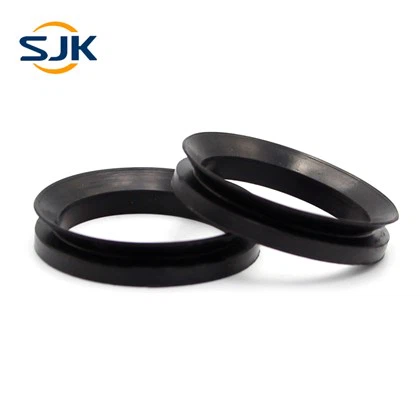


V ring commonly is installed on shaft. Different from other seals, it has a wide range of applicable sizes, which you can check on our size sheets.
V ring including VA, VS, VL, VB and VXL types. Jiacheng New Material (SJK) has VA and VS in stock with material NBR and FKM.
Other materials and sizes can be custom made according to your requests.
Benefits of V Ring
A V-Ring is a solid rubber seal used on shafts to prevent dirt, moisture, and other unwanted material from entering an oil seal, housing, or any other desired area while simultaneously keeping lubricants in. It works by stretching over the shaft to create a tight seal along the shaft while the flexible lip seals lightly against the counterface at a right angle to the shaft. The V-Ring works well on its own and excels when combined with rotary shaft seals to help extend the life of bearings, oil seals, and shafts. Seals provide the same function as V-Rings, but with the added protection of a metal case.
Simple
Little prep required when installing. Simply ensure the shaft is clean and try, apply a film of lubricant to the v-ring lip, and slide the v-ring down until the flexible lip contacts the counterface. The lip presses against counterface with little pressure and friction.
Economical
Wide tolerances allow one v-ring to fit multiple shaft sizes and to account for substantial shaft misalignment and eccentricity in the shaft. Its durability ensures a long work life and that it won’t be damaged during installation.
Versatile
Performs well in dry applications, on rotating shafts and oscillating shafts, and at high speeds over 3000 FPM.
What size is a V-Ring?
|
Designation |
Dimensions |
|
|
Shaft diameter range |
Nominal seal width |
|
|
5 VS V |
4.5 |
5.2 |
|
6 VA R |
5.5 |
3.7 |
|
6 VA V |
5.5 |
3.7 |

What Is the Difference Between V Ring and Lip Seal?
V-ring is a solid all-rubber seal. The function of V-ring is to exclude dust, dirt, water, oil splash or other aggressive contaminants from entering into the bearing housing while retaining grease.
V-ring acts as flinger, since it rotates with the shaft and causes the lip seal to rotate against the housing or bearing. And as the speed increases, friction decreases due to centripetal force.
V-ring can be utilized as either a primary or backup seal and perform an excellent sealing job.
When Should You Use an V-ring?
Generally speaking, we recommend using an V-ring only in applications where a standard O-ring is insufficient. V-rings are used in a wide range of static and dynamic applications including reciprocating rods and plungers; rotating and spiral movements on shafts and spindles; radial-static seal for bushings and pipes; axial-static seal for flanges and more. In reciprocating applications, they provide reduced running and breakout friction and reduce the risk of spiraling when compared to O-rings.
When deciding what sealing solution to choose, other characteristics such as material type, hardness, compression set, tensile strength, elongation, chemical resistance and heat resistance all have to be taken into account. While thousands of stock sizes are available, you may need a custom-designed sealing solution to ensure exceptional performance in demanding applications.

5 Must-Follow V-ring Maintenance Tips
Following are the five maintenance tips we recommend the most to keep your V-rings performing their best:
Inspect V-rings regularly
One of the most critical aspects of maintaining V-rings is routine inspection. Over time, V-rings can become unreliable seals that are brittle. These outdated V-rings may crack or even tear. To prevent leaks or premature failures, inspect your V-rings regularly, especially if they are exposed to corrosive environments, accumulated solids, harsh environmental conditions, or harsh chemicals.
Avoid using incompatible chemicals
Some chemicals can degrade or damage certain V-ring materials, causing performance-reducing cracks, stains, discoloration, swelling, shrinkage, or hardness changes. Be sure to select a material compatible with the chemicals used in your application and avoid using any incompatible chemicals that could damage the V-ring.
Keep V-rings lubricated
Proper V-ring lubrication can help these sealing solutions maintain flexibility and prevent friction damage. Choose a lubricant compatible with the V-ring material and the application in which it is used, and be sure to apply the lubricant evenly and avoid over-lubricating, which can attract dirt and debris.
Clean V-rings regularly
Regular cleaning of equipment and V-rings can help prevent contamination that could lead to premature failures or leaks. Follow the manufacturer's recommendations for cleaning and disinfecting your equipment and V-rings to maintain optimal performance.
Replace V-rings on schedule
Even with proper maintenance, V-rings will eventually wear out and must be replaced. Keep tabs on the manufacturer's recommended schedule for replacing V-rings to avoid unexpected failures or leaks.
Three Steps To Installation: V-Ring
Step 1: Lubrication
APG highly recommends lubrication for V-ring installation. We recommend this because a well-lubricated V-ring reduces surface friction and creates a smooth transition for installation. It is essential to choose the right lubricant, and the proper formula will vary based on the type of application as well as the V-ring material. Choose a lubricant that will work with your application and the V-ring.
Compatibility with your application is crucial because you don’t want to clog the system filters or cause other complications. Choosing a lubricant compatible with your V-ring will ensure that it does not shrink or swell, influencing how it performs once installed. Compatibility with your application is also essential because choosing a lubricant compatible with your V-ring will ensure that it does not shrink or swell, influencing how it performs once installed.
Step 2: Confirm Sizing
Once you have confirmed that your lubricant is safe for use with your V-ring and your application, it is a good practice to double-check the V-ring size. The wrong size can lead to a damaged seal, poor performance, or a damaged system.
Step 3: Installation
Once you have verified the lubricant compatibility and size, you are ready to place the V-ring. If necessary, cover any sharp edges during the installation process to avoid damage to the V-ring. Lightly lubricate the V-ring and place it in the groove, sliding it, not rolling it into place. In some instances, special V-ring tools can help to properly place an V-ring that cannot be easily placed by hand. A well-placed V-ring should be slightly stretched before application, but don't over-stretch it. This stretch should be between 1-5%, with 2% ideal for most applications.
Your Ultimate Guide To Choosing The Right V-Ring For Your Needs
You cannot underestimate the importance of choosing the right v-ring for your application. The wrong choice can lead to decreased performance, increased wear and tear, and even product failure. To prevent that from happening, here are the essential factors to consider when choosing a v-ring for your application:
Shaft diameter
The shaft diameter is the diameter of the shaft that the v-ring will seal.
A loose fit can cause contaminants to seep in, while a tight fit can lead to excessive wear and tear.
Use a micrometer or caliper to measure the shaft diameter with precision.
V-ring size
V-rings are available in various sizes—from small to large—and choosing the wrong size can have disastrous consequences for your application.
If it's too small, it won't fit securely, and if it's too large, it won't create a tight seal.
It's a good idea to refer to the manufacturer's catalogue or online resources to find the perfect v-ring size for your application.
Shaft tolerance
It's a critical factor that you cannot afford to overlook.
The shaft tolerance is the allowable deviation from the nominal shaft diameter.
It is crucial to choose a v-ring that matches the shaft tolerance to ensure proper sealing.
V-ring material
V-rings come in different materials like nitrile, viton, and silicone—each with unique properties like temperature range, chemical resistance, and hardness.
If you choose a material that isn't suitable for your application, you put your products at risk.
You can consult your v-ring manufacturer or supplier if you are unsure of what material to choose.
V-ring type
There are different types of v-rings available, including standard, tapered, and custom designs, each with its own unique advantages.
Standard v-rings are great for most applications, but for those with larger shaft diameters, tapered v-rings may be the way to go.
And if you need a v-ring with specialized properties, like high temperature or chemical resistance, custom designs can be tailored to meet your exact needs.
Operating conditions
It's essential to choose a v-ring that can withstand operating conditions to ensure optimal performance and longevity.
High temperatures or harsh environments require a durable v-ring material that can stand up to the challenge.
But if your application requires low pressure and temperature, a softer material will do the trick.
Installation
Improper installation can lead to product failure and costly downtime.
Some v-rings require specialized tools or techniques, while others are a breeze to install.
To ensure proper sealing and avoid installation headaches, choose a v-ring that's easy to install and fits securely. The right v-ring can make all the difference in the performance and longevity of your product.
Our Factory
Zhejiang Jiacheng New Material Co.,Ltd. (SJK for short) was founded in 1994, focusing on the R & D, production, and sales of special rubber seals, and mastering high-end sealing professional production technology. The company mainly produces O-ring, ED ring, rubber gasket, rubber strip, and other sealing products.
As a leading enterprise in domestic fluorine material sealing industry, SJK always keeps in mind the enterprise mission of "Striving for maximum interests of enterprises and customers". At present, SJK has won the trust and recognition of many well-know customers at home and abroad, and its sales network has covered Europe, America, the Middle East, Southeast Asia, and other places. With the vision of "becoming a world famous seal brand", SJK keeps forging ahead, has the courage to shoulder social responsibility, and abides by the core values of "honesty, pragmatism, innovation, and win-win". Strive to build the first brand of high-end seals.
Video 1
Video 2
Video 3
Our Certificate


Ultimate FAQ Guide to V Ring
Zhejiang Jiacheng New Material Co., Ltd. is one of the most professional v ring manufacturers and suppliers in China, specialized in providing high quality customized products. We warmly welcome you to buy or wholesale v ring in stock here from our factory. Contact us for quotation and free sample.
Rubber V Ring Water Seal, Rubber V Ring, V Ring Seal Types