


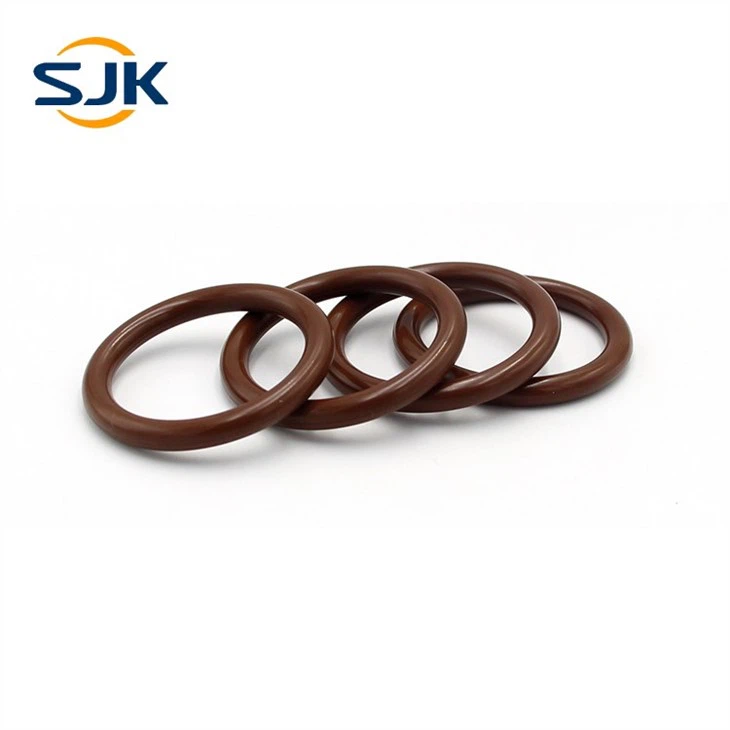
FKM O Ring Material
Zhejiang Jiacheng New Material Co., Ltd. is one of the leading manufacturers and suppliers of fkm o ring material in China, also supports customized service. Welcome to wholesale bulk high quality fkm o ring material in stock here from our factory. If you have any enquiry about quotation and free sample, please feel free to email us.
FKM Material Specification & Viton® Rubber Properties: Detailed Technical Guide

Fluorocarbon Elastomers (FPM/FKM) Engineering Reference: Chemical Structure, Grade Classifications, Fluid Resistance, and Cost-Performance Analysis.
A high-performance synthetic elastomer known for its remarkable resistance to heat, chemicals, oils, and harsh environmental conditions is fluorocarbon rubber (FKM, FPM, and Viton®). FKM O-rings and bespoke seals, which are made from fluorinated hydrocarbon monomers, are essential parts of demanding applications in the oil and gas, automotive, aerospace, and chemical processing sectors.
This thorough guide helps engineers and procurement specialists choose the best materials for maximum dependability and cost effectiveness by breaking down the molecular composition, grade classifications (Type A, B, F, and specialty monomer grades), fluorine content correlations, and mechanical specifications.
FKM Rubber's Chemical Structure and Molecular Engineering
The strong electronegativity of fluorine atoms and the distinct polymer backbone of FKM are directly responsible for its excellent performance. Fluorinated monomers are used to create FKM polymers, mainly:
- Fluoride Vinylidene (VDF/VF2)
- HFP, or hexafluoropropylene
- TFE, or tetrafluoroethylene
- PMVE, or perfluoromethylvinyl ether, is utilized in specialty grades at low temperatures.
1. The strength of the carbon-fluorine (C-F) bond
The Carbon-Fluorine (C-F) bond, which has a high bond dissociation energy (about 485 kJ/mol), is the foundation of FKM. Compared to conventional hydrocarbon rubbers (such NBR or EPDM), this strong atomic bond offers essential resistance to oxidation, chemical assault, and heat deterioration.
2. The Effect of Steric Shielding
The Van der Waals radius of the heavy fluorine atoms is quite large. They sterically protect the C-C main chain from chemical breakage by solvents, acids, and strong oxidizers by forming a dense electron cloud around the carbon-carbon backbone.
3. Mechanisms of Vulcanization and Cross-linking
Three main cross-linking techniques are used to cure FKM materials, which directly affects their media resistance and physical characteristics:
- Diamine curing is an early method that offers a strong binding to metal but is less resistant to steam and moisture.
- The industry standard Bisphenol Curing (Diphosphate System) provides quick cure rates, good heat stability, and outstanding resistance to compression sets.
- Peroxide Curing: Provides improved resistance to acids, steam, hot water, and abrasive fuel mixes; necessary for high-fluorine and specialist low-temperature grades.

FKM Grade Classification: Cost, Performance, and Fluorine Content
Not every FKM material is made equally. The fluorine concentration, which usually ranges from 66% to 70%+, determines the polymer's resistance to chemical swelling and flexibility at low temperatures. Choosing the right grade strikes a compromise between raw material costs and sealing integrity.
| Grade Type | Monomer Composition | Fluorine Content | Primary Advantages | Chemical Resistance Highlights | Relative Cost Index |
| Type A (Standard Dipolymer) | VDF + HFP | ~66% | General purpose, excellent cost-to-performance ratio, low compression set. | Standard fuels, oils, lubricants, aliphatic hydrocarbons. | ★☆☆☆☆ (Baseline) |
| Type B (Terpolymer) | VDF + HFP + TFE | ~68% | Higher thermal resistance, reduced swell in aggressive fuels. | Biodiesel, aggressive automotive fluids, aromatic solvents. | ★★☆☆☆ (+15% - 20%) |
| Type F (High-Fluorine Terpolymer) | VDF + HFP + TFE (Optimized) | ~70% | Maximum chemical resistance among standard FKMs, exceptional acid resistance. | Oxygenated fuels, flex-fuels (ethanol mixtures), concentrated acids. | ★★★☆☆ (+35% - 50%) |
| Specialty Low-Temp (FEPM / GLT-Type) | VDF + TFE + PMVE + Cure Site Monomer | 64% - 68% | Extended low-temperature flexibility down to -40°C or below. | Polar solvents, low-temp automotive/aerospace fuel lines. | ★★★★★ (+150% - 300%) |
Engineering Trade-off: Chemical Resistance vs. Low Temperature
Although a larger fluorine content increases swell and chemical resistance, it also naturally reduces low-temperature elasticity (increasing the glass transition temperature, Tg). Base FKM grades (-20°C limit) must be upgraded to PMVE-modified specialized grades (such as Viton GLT) when operating in arctic conditions or low-temperature aircraft to avoid dynamic sealing failure at temperatures as low as -40°C.
FKM Rubber Properties& Technical Specification Matrix
The following natural properties represent regular lab test results for high-grade Viton®/ FKM compounds obedient with ASTM D2000/ SAE J200 requirements.
Technical Specification:
Hardness Range: 55 to 90 Shore A( Standard: 70& 75 Shore A)
Tensile Strength: 10.0 to 17.5 MPa( 1450 to 2500 PSI)
Elongation at Break: 150% to 300%
Continuous Operating Temperature: -20°C to+ 200°C (-4°F to+ 392°F)
Intermittent High Temperature Limit: Up to+ 230°C(+ 446°F)
Compression Set( 22h@175°C): ≤ 15%( Bisphenol cured Type A)
Density/ Specific Gravity: 1.80 to 1.90 g/cm³
Color Availability: Black( Standard), Brown, Green, Red, Custom Color Matching
Chemical Compatibility& Industrial Application Scenarios
1. Recommended Media( Excellent Compatibility):
- Petroleum oils, large fluids, and nutrient grease
- Aliphatic and aromatic hydrocarbons( benzene, toluene, xylene)
- High-vacuum environments( low gas permeability)
- Oxygen, weathering, and serious atmospheric exposure
- Concentrated nutrient acids and extreme chemical solvents
2. Non-Compatible Media( DO NOT USE WITH):
- Low molecular weight organic acids( formic acid, acetic acid)
- Polar solvents( MEK, acetone, ethyl acetate)
- Skydrol® mechanical fluids
- Superheated steam and hot water (unless utilizing specialized peroxide-cured grades)
- Aqueous ammonia and strong amines
3. Major Industry Applications:
- Automotive: Energy injection seals, flywheel oil seals, fast connectors, manifold gaskets.
- Aerospace: Aircraft energy method seals, engine manifold O-rings, high-altitude mechanical seals.
- Chemical Processing: Pump pads, valve seats, electrical seals handling volatile substances.
- Oil& Gas: Downhole packers, blow-out preventers( BOPs), subsea wellhead seals exposed to sour gas( H2S).
The complete Fluorocarbon Elastomer Technical Data Sheet( TDS), Chemical Resistance Guide, and ASTM D2000 Specification Sheets are available for immediate access. Need OEM locking validation or custom compounding? Our substance specialists are on hand to help.
Request Technical Support & Instant Quote
Get in touch with SJK right now to talk about your pressing sealing issues!
Hot Tags: fkm o ring material, China fkm o ring material manufacturers, suppliers, factory, High Performance VITON O Rings, FKM O Ring Material, Colorful Custom FKM O Ring, FKM O Ring Chemical Resistance, FKM Viton O Rings, FKM O Ring Seal in Stock
Send Inquiry
