

The difference between NBR and FKM O-rings
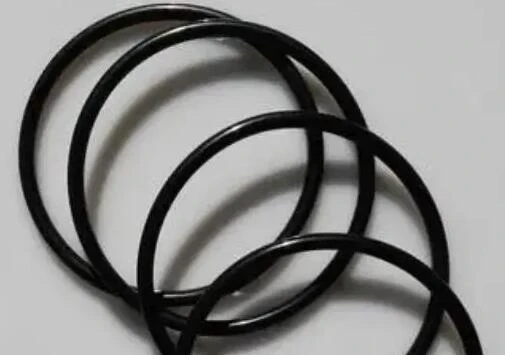
O-ring is a commonly used sealing element used to prevent the leakage of liquid or gas. When selecting an O-ring, the choice of material is crucial, as different materials have different properties and suitability. NBR (nitrile butadiene rubber) and FKM (fluoroelastomer) are two common O-ring materials that differ in performance and application.
NBR (nitrile rubber)
NBR is a synthetic rubber with good oil, abrasion and fuel resistance. It is widely used in some common industrial applications. The following are some of the main features and application scenarios of NBR:
Oil resistance: NBR has excellent oil resistance and is suitable for many lubricating oil and fuel sealing applications, such as engines, hydraulic systems, etc.
Wear resistance: NBR has good wear resistance and can maintain sealing performance in some high-wear environments.
Low temperature performance: NBR has good low temperature elasticity and can maintain elasticity within a certain range, making it suitable for low temperature environments.
Application scenarios: NBR is often used in some general sealing applications, such as automotive engines, hydraulic systems, mechanical seals, etc.
FKM (fluorine rubber)
FKM is a high-performance synthetic rubber with excellent chemical resistance and high temperature performance. It is widely used in applications requiring higher temperatures and harsher chemical environments. The following are some of the main features and application scenarios of FKM:
Chemical resistance: FKM has excellent chemical resistance and can resist a variety of corrosive liquids and gases. It is suitable for chemical industry, medical equipment and other fields.
High temperature performance: FKM can maintain its elasticity and sealing properties in high temperature environments, and is suitable for high temperature engines, stoves and other applications.
Weather Resistance: FKM has good weather resistance and is able to maintain performance outdoors and in harsh environments.
Application scenarios: FKM is often used in some sealing applications with more stringent requirements such as high temperature and chemical corrosion, such as aerospace, petrochemical and other fields.
Comparison of NBR and FKM
Oil resistance: NBR performs well in conventional oils, while FKM performs better in harsher oils and chemicals.
Temperature resistance: FKM has higher temperature resistance and is able to maintain performance over a wider temperature range.
Chemical resistance: FKM performs better in chemical resistance and can resist a wider variety of chemical media.
Price: Generally, FKM costs more than NBR, but in specific high-performance applications, its performance advantages can offset the cost difference.
When choosing NBR or FKM, you should make a judgment based on the specific application environment and requirements. If the application involves severe conditions such as high temperature, chemical corrosion, etc., FKM may be a more suitable choice. For general industrial applications, NBR may be a more cost-effective option. Taking into account the material's performance, cost and application requirements, selecting the appropriate O-ring material is the key to ensuring the sealing effect.